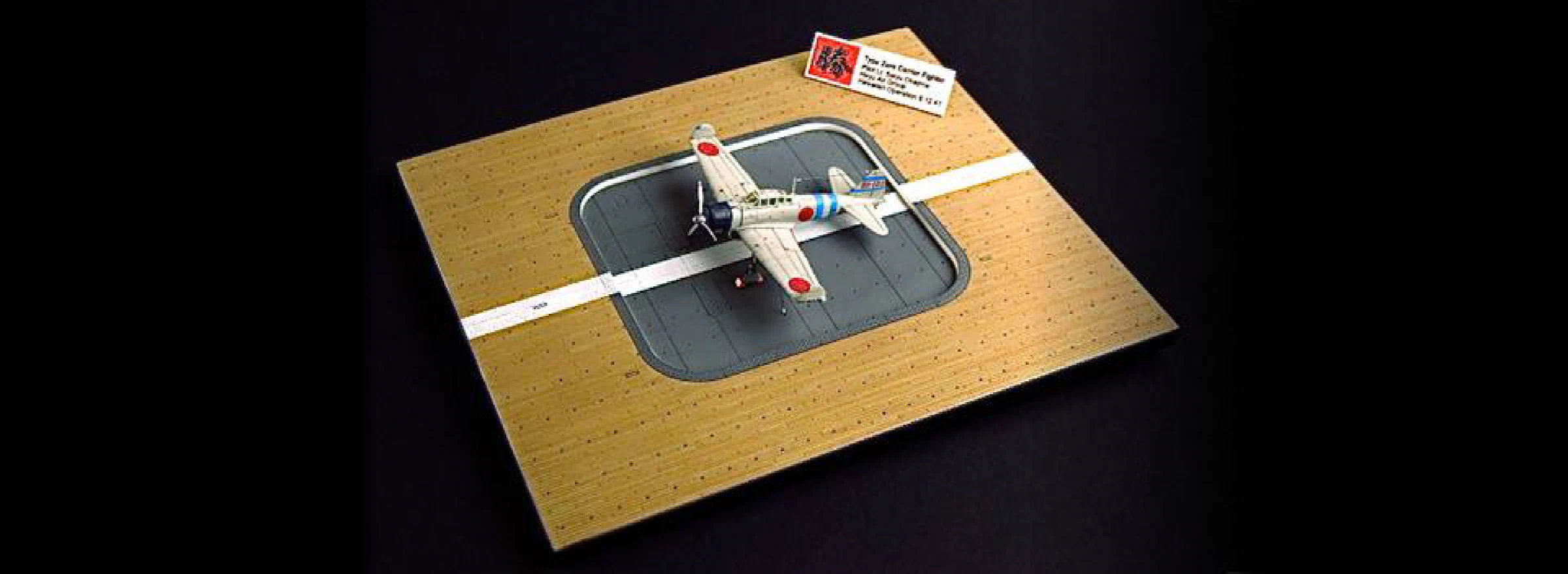
A6M2b Type 0 Model 21
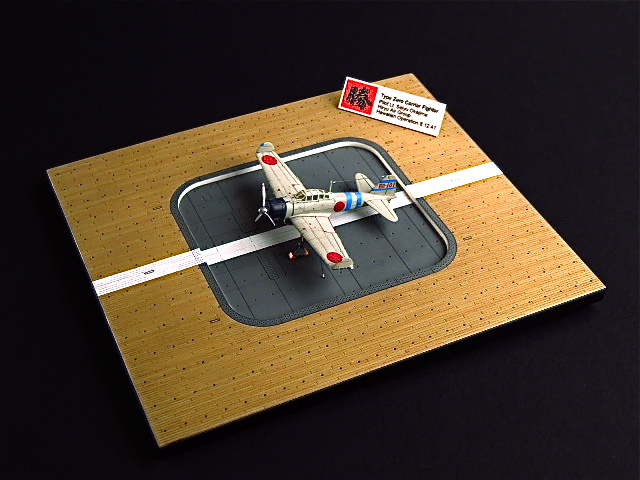
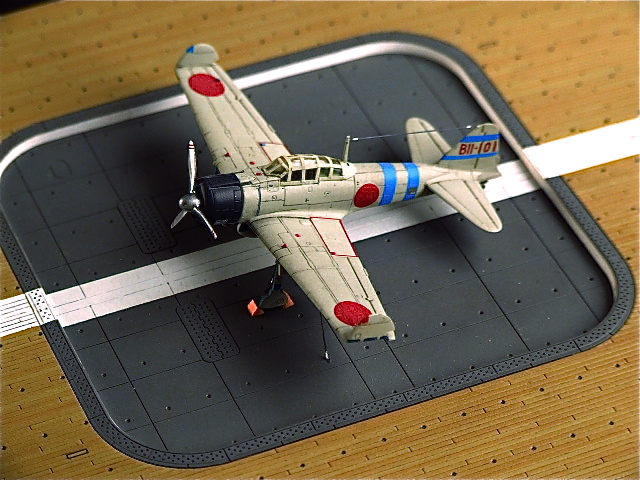
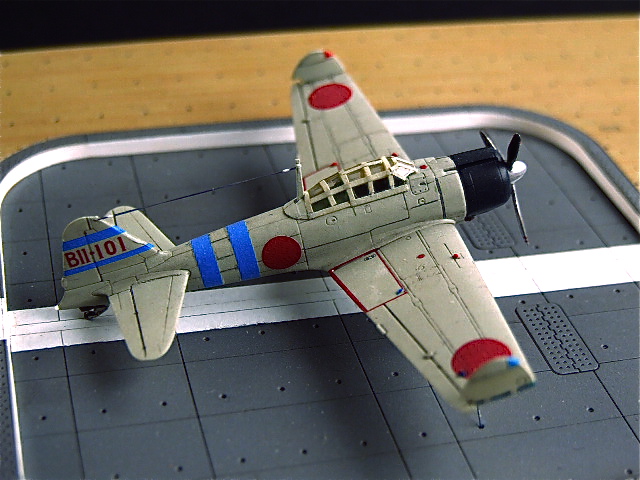
Build Notes
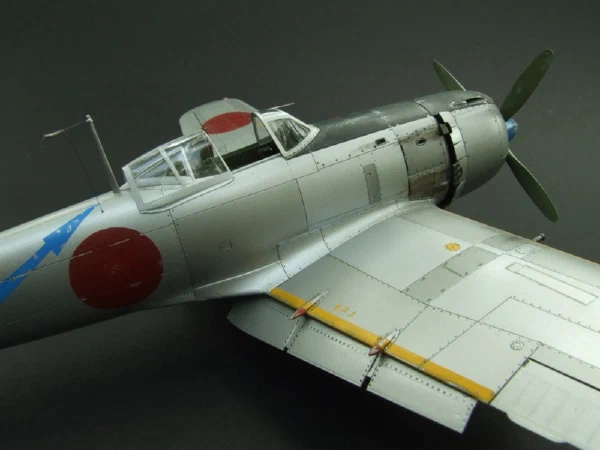
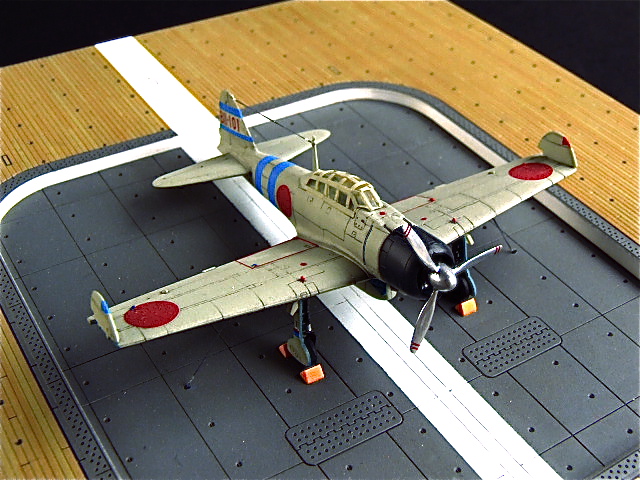
This model represents B11-101, an A6M2b Model 21 assigned to the aircraft carrier Hiryu and piloted by Lieutenant Kiyokuma Okajima during the December 7, 1941 attack on Pearl Harbor.
Lieutenant Okajima served as the Fighter Squadron Commander (Buntaichō) for the aircraft carrier Hiryu. During the opening minutes of the Pearl Harbor raid, he personally led Hiryu’s first-wave escort group, which consisted of six fighters. Okajima led his squadron down through rolling cloud cover to conduct devastating, low-altitude strafing runs on Ewa Marine Corps Air Station, systematically destroying parked American aircraft on the ground before they could scramble to defend the island. Okajima survived both waves of the attack, as well as the later catastrophic sinking of the Hiryu at the Battle of Midway.
Okajima graduated from the Imperial Japanese Naval Academy (63rd Class) and went on to participate in almost every major carrier action during the first critical year of the Pacific War.
Early Victories: Following the attack on Pearl Harbor, he led Hiryu’s fighter group through the Indian Ocean raids and the Battle of Midway. During a detour to support the invasion of Wake Island on December 23, 1941, Okajima famously engaged the island’s final defending American F4F Wildcats, downing US Marine pilot 2nd Lt. Carl R. Davidson.
Midway Survival: During the chaotic Battle of Midway, Okajima tirelessly flew continuous Combat Air Patrol (CAP) cycles to defend the fleet, successfully managing to return and land his Zero on the heavily damaged, burning Hiryu shortly before the order was given to abandon ship.
The Stand Against the Kamikaze Tactics
As the war progressed and Japan shifted desperately to asymmetric warfare, Okajima was promoted to Lieutenant Commander and placed in charge of land-based interceptor squadrons. He commanded the 204th Kōkūtai in the Solomon Islands and eventually led Hikōtai 303 (303rd Fighter Squadron) of the 203rd Kōkūtai based in Kyushu.
It was during this late-war period that Okajima cemented his legacy among his men. When the high command began demanding that fighter squadrons systematically draw up rosters for Kamikaze (suicide) attacks, Okajima adamantly and publicly refused to allow his pilots to participate.
His Philosophy: Okajima fiercely argued that a fighter pilot’s fundamental duty was to use their training, tactical intelligence, and mechanical skills to engage the enemy and survive to fight another day. He firmly stated that if a pilot died in a dogfight due to a disparity in skill, it was an accepted hazard of war, but wasting seasoned assets in mechanical suicide ran contrary to the purpose of aviation.
Protecting His Men: Despite being branded a “traitor” or “national rebel” (kokuzoku) by higher-ranking naval officers who desperately pushed the suicide doctrine, Okajima used his considerable authority and commanding presence to shelter Hikōtai 303 from suicide orders. His squadron instead remained a dedicated, conventional air-defense unit, flying advanced Mitsubishi A6M5 Zeros against American bomber streams.
Post-War Legacy
Okajima’s steadfast refusal to sacrifice his men to a hopeless strategy ensured that many of his pilots lived to see the war’s conclusion. His surviving crew members held him in such immense esteem that they composed a localized anthem titled “The Song of the Okajima Fighter Squadron,” which they continued to sing post-war despite Okajima’s humble, explicit orders to change the name to reflect the unit number instead of his own.
Following the dissolution of the Imperial military, Okajima transitioned into post-war service, joining the Japan Maritime Self-Defense Force (JMSDF), where he rose to the rank of Rear Admiral. He also went on to share his tactical expertise as a professor at the National Defense Academy of Japan before passing away peacefully in 1995 at the age of 81.